
As cities see an influx in COVID-19 cases, now more than ever it’s crucial that businesses keep their interior spaces sanitized and safe for employees. This is not only essential for life safety purposes, but also for employees to feel less stressed as they return to the office. Architectural trends are predicting adjustments in city designs and office designs. Returning to work isn’t easy for everyone and it’s crucial for employees to have a safe and clean workspace. Our team assembled a checklist of items to keep in mind when going back into the office.
1. Start with a plan
Creating a health preparedness plan for your office and off site work will help eliminate confusion for those wanting to return to the office; giving them protocols to follow. Our code consultants have made adjustments to their site inspections. While some have gone virtual, nothing beats an in person inspection which can be daunting during these times. Having a written plan to exchange and request with other companies, keeps both sides accountable. This plan should include:
- Prerequisites to follow before going to the office or going to any Outside Visits
- Building Management Accountability
- Field, Contracting and Business Partner Visits
- Visitor Policies
- On first arrival Must wear a mask, sign in with temperature check, and apply hand sanitizer
- Conference etiquette
- Create a shared online office schedule
- Kitchen adjustments
- Workspace and office safety precautions
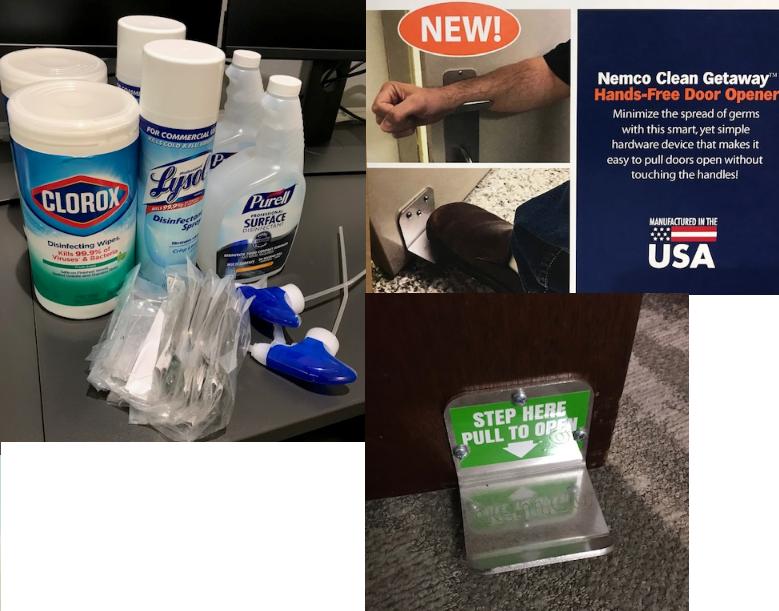
- Prepare office space with disinfectant items
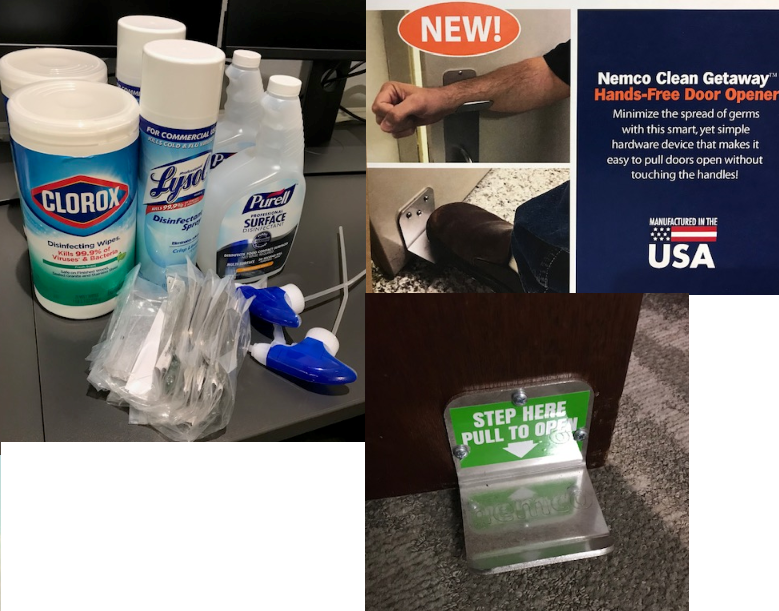
- Go “touchless”: Burnham got creative by installing footholds at the bottom of our entry doors and installed a bluetooth badging system to avoid skin contact.
2. Building Management Accountability
Keep your building management accountable and ask for safety or operational plans taken. Specifically, how they plan on keeping the public space sanitized, establishing social distancing and alternative communication forms. Keeping them accountable will help tenants one step closer to a safe environment.
3. Communication and Organization
During a time of uncertainty, it’s important more than ever to have clear and concise communication with teams to acknowledge changes. With employees going into spaces at a higher frequency, weekly updates and shared schedule changes are key. Below are some best practices on execution:
- Provide weekly updates that include any local policy shift both locally and nationally in safety standards.
- Create an alternating schedule for those that do go into the work space to create a healthy balance.
- Designate a point person/people that will make sure cleaning and office supplies needs are met.
As businesses continue to navigate office safety, it’s essential to find a balance and set a positive standard as we find our new norm. What methods is your business taking to create a safer office space? Share them with us!