Remote Inspections – The Future is Now

Posted by Chris Beauchamp
As we find ourselves adapting to a new normal after the events of the past two years new challenges are presenting themselves more often than we'd like. One issue currently affecting businesses, large and small alike, is a tight labor market. This shortage of available talent has had a huge impact on the inspection and permitting process, hindering all stages of construction.
Technology to the Rescue
Labor shortages do not necessarily have to hold up progress – innovative solutions are already in place to overcome these obstacles. For example, a remote solar inspecting app, available on both iPhone and Android platforms, has been in service for several years now. While the success of the app proves that remote inspecting works, many building departments have been slow to get onboard and hesitant to adopt the new technology.
A missed opportunity for sure as municipalities and inspectors can easily become overwhelmed and forced to put in overtime hours or delay inspections. At the very least, the time and expense differences between in-person and remote inspecting alone should have been its own catalyst for change.
Advancements in technology have made so many things in our lives easier, changing the way we handle daily tasks and navigate the world. Building departments need to take advantage of new technology to help streamline workflow and speed up the inspection and permitting process.
Inspections 2.0
Until recently field inspectors were using an antiquated paper on clipboard system with digital cameras. There were many errors in placing their field data into the proper forms and significant data loss, resulting in incomplete forms.
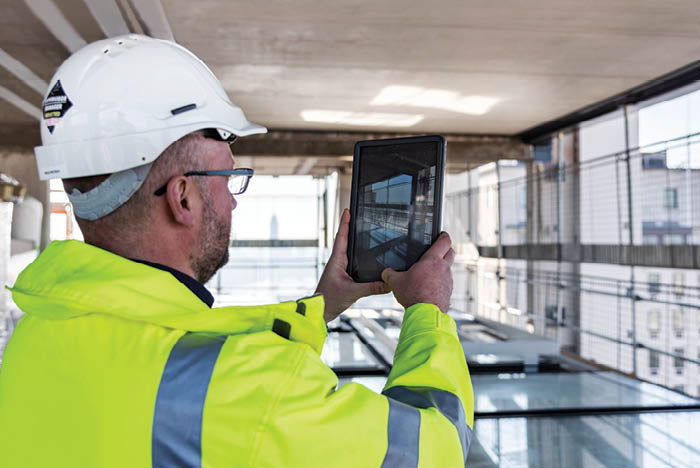
The mobile inspection app eliminates those pitfalls by capturing the data using a sophisticated and easy-to-use form that is accessible on any smartphone or tablet, whether online or offline. Accompanying photos are also cataloged with corresponding data.
How does it work? A typical remote inspection and verification process is outlined below.
- A member of the inspection or construction crew is directed through the app, step-by-step, to answer questions and take specific photos required to make a proper assessment of the work performed. To guarantee that the inspector receives all the necessary information, some apps will not submit if any details are missing. Note that all the data is geo-tagged and time-stamped to provide a record of the time and location of all information gathered.
- The inspector reviews the information from a computer, without having to physically visit the site.
- The building department can keep this data on file, along with photos, as proof of their findings.
Real Time Benefits
- Allows an inspector to safely observe objects and materials from a distance when the objects are inaccessible or are in dangerous environments.
- The app eliminates stops in production, ensuring the continuity of project schedules when physical inspection is impossible.
- Enables you to monitor an inspection as required for instant feedback and real-time results
- Corrections required by the inspector can be fixed, photographed, and sent back to the inspector in a timely manner. One small failure should no longer delay site completion.
- Reduces the carbon footprint of your workforce and increases the number of inspections that can be completed in a day by eliminating the travel to site.
Out With the Old – in With the New
The days of physical trips to city hall, lugging stacks of paperwork, are slowly fading away. Many cities are expanding their websites to accommodate the new processes. Electronic filing of permitting paperwork is gaining acceptance in many areas. Currently, wet signatures and raised stamps or seals for document execution are being replaced with e-signature services. The sooner we institute electronic filing and remote inspecting industry-wide, the quicker we can make a smooth transition to this more efficient process.