Drive through almost any American suburb and you'll pass one.
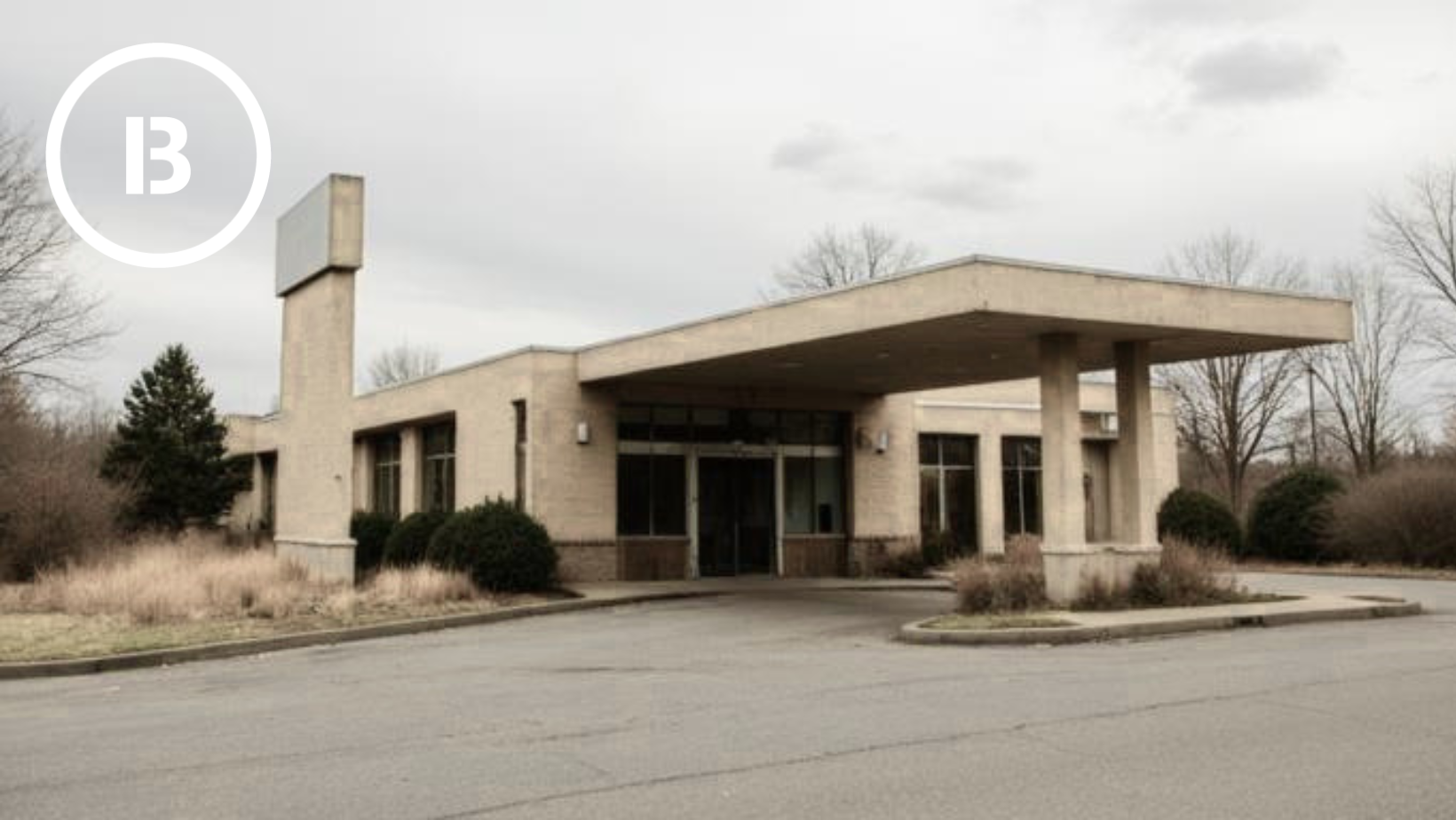
Former bank branch. Drive-through canopy still there. Vault door visible through the plate glass. Purpose-built for one use, abandoned by the industry that built it, now vacant or cycling through tenants nobody planned for.
Nobody who approved those branches in 2003 was thinking about 2023. They were thinking about jobs, tax base, whether the drive-through would back up onto the street. Real questions. Just not the only ones.
I think about those buildings a lot when I look at what's happening with data centers right now.
The Fight We're Having Isn't the Only Fight That Matters
The conversations today, about aesthetics, power, water use, neighborhood character, are worth having. I've written about them in the last two posts. Communities should raise those concerns. Developers should answer them honestly.
But there's a question almost nobody is asking. The one that will matter most in twenty years.
What is your decommissioning plan? Who guarantees it? What does this site look like when the market moves on?
Because it will. It always does.
This Is Not a Vacant Bank Branch Problem
A decommissioned data center doesn't leave behind an awkward floor plan and a canopy.
It leaves behind power infrastructure sized for loads that no longer exist. Cooling systems with no conversion path. Structural reinforcement built for floor loads that don't apply to any conventional occupancy. Backup fuel systems, battery storage, refrigerants that carry environmental liability long after the last server goes dark.
The adaptive reuse problem for a purpose-built hyperscale facility is genuinely hard. And in most cases, the community holding the bag had no idea it was accepting that obligation when the original permit was approved.
The banking parallel is most useful not during the buildout. It's after. The communities that spent a decade pushing back on branch proliferation were asking real questions about neighborhood character. But they weren't asking about exit obligations, remediation bonding, or what a stranded asset at that scale does to surrounding property values. When mobile banking arrived and the branches closed, they discovered they'd negotiated the wrong terms.
They'd won arguments about signage. They'd lost the longer conversation about lifecycle accountability.
There's Another Agreement Nobody Is Talking About
Before a data center project ever reaches a planning commission, many developers have already negotiated a Transmission Security Agreement with the local utility. Long-term contracts, often fifteen to twenty-five years, that secure dedicated transmission capacity and lock in the power infrastructure the facility needs to operate.
They're also, in practical terms, one of the primary reasons it becomes nearly impossible to walk back a data center commitment once it's made.
The decommissioning problem isn't just the building. It's the grid infrastructure built to serve it. Substations sized for hyperscale loads. Transmission lines routed for this facility specifically. Utility capital expenditures justified by a contract the community never saw and had no voice in negotiating.
By the time a community is raising questions at a zoning hearing, the utility agreement is already signed. The grid investment is already planned. The leverage that might have produced a different outcome is gone.
What Communities Should Actually Be Asking
These aren't hostile questions. They're what any sophisticated landowner would ask before signing a long-term ground lease.
Is there a decommissioning plan, and is it bonded? What are the operator's obligations if the facility changes hands? What remediation standards apply, and who guarantees them if the original developer no longer exists? What does the community benefit agreement say about stranded infrastructure, and does it survive an ownership transfer?
And critically: has a Transmission Security Agreement already been executed with the utility? On what terms? How long does it run? What happens to local ratepayers if the operator exits before it expires?
A city council approving a major data center campus is making a long-term land use commitment, often without the legal and technical capacity to negotiate its terms effectively.
The hyperscalers have legal teams, government relations departments, and decades of experience navigating municipal approval processes. Most of the municipalities granting those approvals do not have equivalent expertise on the other side of the table.
Where We Come In
This is something I feel strongly about at Burnham.
Our job isn't just to move permits. It's to help communities and developers have better conversations before the concrete is poured.
The leverage communities have is almost entirely front-loaded. It lives in the planning and approval process, before the first foundation is dug. Once that window closes, the economics of half-finished infrastructure, the contracts already signed, the political capital already spent, they all work against reconsideration.
A voluntary decommissioning framework, structured into the community benefit agreement from day one, isn't a concession. It's a differentiator. It separates a developer who is genuinely partnering with a community from one who is managing an approval process.
The data centers being built in the next five years will still be part of the American landscape in 2075. Some will evolve and find second lives. Some will be liabilities. Stranded, costly, contested.
The difference between those two outcomes will be determined, in large part, by the quality of the conversations happening right now.
The vacant bank branch is a monument to the questions nobody thought to ask.
We have the chance to ask better ones.
Carson P. Kyhl is Principal at Burnham Nationwide, the nation's leading permit expediting and building code consulting firm. Burnham works with national developers, retailers, and technology clients across eight major markets.